Other than AI quotes, answers were written by a human being, Valerie Woelfel, based on personal experience.
Why do an archaeological illustration, why don’t you just take a photograph?
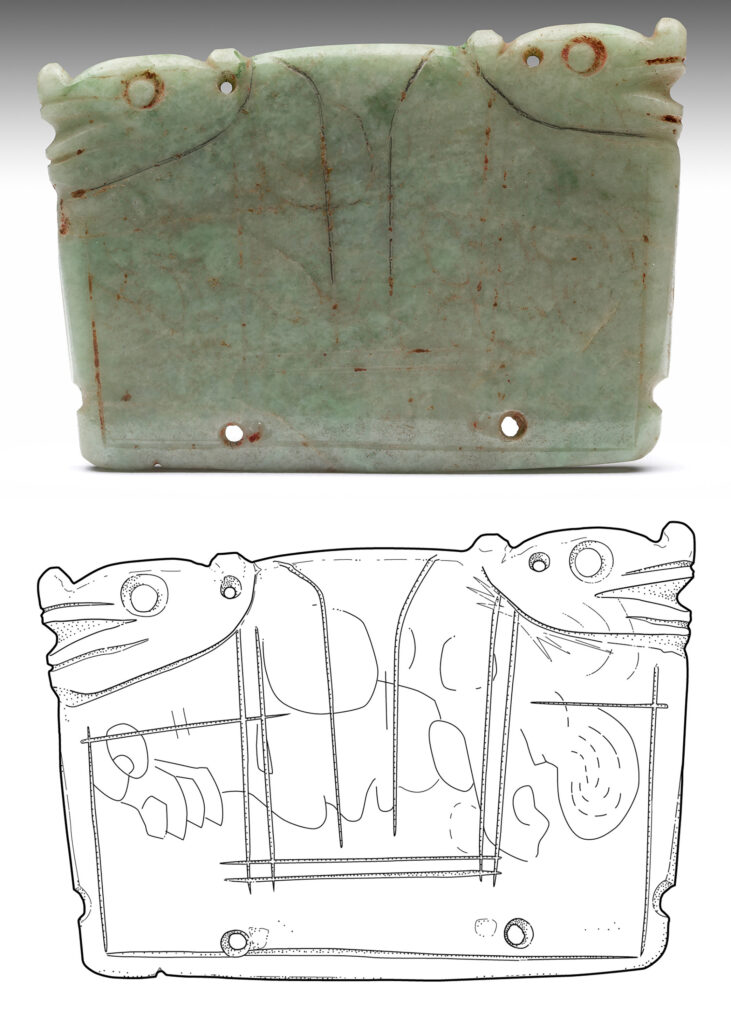
- Photographs and archaeological illustrations serve different purposes. They are not in competition with each other. They each have their own uses and complement each other. A photograph, for example, can quickly capture the color and texture of an object while a drawing of the same artifact more clearly shows the details of the object.
- When an archaeological illustrator draws an artifact or a map, they use their knowledge of archaeology to emphasize some elements while minimizing or leaving out others. For example, an illustrator will clearly depict a maker’s mark or faded decoration, while leaving out cracks and stains that were not an original part of the object. A photograph would capture everything, which can hide valuable information while distracting with unnecessary elements.
- An illustration is an important part of the analysis process. Drawing an artifact starts with careful measurement and observation of the object. Drawing a publication-quality site map or baulk drawing often involves consulting with the archaeologist and clarifying details based on field drawings and photographs. In contrast, someone can take a photograph or 3D scan without having any knowledge of the archaeology involved, and the step of careful analysis is lost.
- An illustrator can reconstruct parts of an object that are missing. A common example can be found in pottery drawings. The illustrator can use a rim chart to calculate the diameter of a vessel based on the curve of a single sherd. That is then used to create an illustration that allows the viewer to understand the interior, exterior, wall thickness, and shape of the vessel. Drawing a reconstruction of a building or site is another example of an image that a photograph can’t capture.
What is archaeological illustration anyway?
- Archaeological illustration is the practice of creating accurate, detailed drawings of archaeological finds, excavation features, and sites. These illustrations are designed to document objects and contexts in a standardized way so they can be studied, compared, and published. Unlike artistic works, archaeological illustrations prioritize precision over artistic interpretation.
- Professional archaeological illustrators use a consistent set of established conventions. This is a shared visual language that viewers can easily read and understand. For example, in an archaeological illustration the light comes from the upper left. This lets the viewer easily understand the texture of an object and distinguish a raised element from an incised one. These conventions also create a uniform look within and across publications even when different illustrators are used to create the drawings.
- Archaeological illustrators may work in the field on excavation sites, in a studio, museum storeroom, or wherever space can be made and the material to be drawn is available. If necessary, they can work from photographs. This is especially true when working with clients in fields such as art history where the illustrator may be drawing a piece that is located in a distant museum.
Can AI do archaeological illustrations?
- Not on its own, but it can be a useful tool when used by a skilled, professional archaeological illustrator who understands both the potential and limitations of AI.
- AI quotes as of July, 2026
- Gemini says: AI is a calculator; human archaeologists are storytellers. As automated tools become more dominant, the ultimate professional value will pivot back to the human instrument. A laser scanner or an AI can map a million data points, but it cannot decide what a line means, nor can it understand the material intelligence of an ancient building fabric. The archaeologists who thrive will be those who use advanced technology to scale their work, but maintain the analogue eye, the manual sketching rigor, and the traditional knowledge inherited from the old-era masters
- ChatGPT says: The main limitation is that archaeological illustration is not just drawing—it is a form of scientific documentation. An illustrator makes informed decisions about what to emphasize, what to omit, and how to represent uncertainty according to established conventions. Current generative AI systems do not reliably make those judgments. Looking ahead, it’s likely that AI will become a strong productivity tool rather than a replacement.
- Perplexity says: AI models learn from large, imperfect datasets and can introduce biases, anachronisms, or stylistic clichés, so any AI-generated illustration must be critically checked against actual archaeological evidence. For formal artifact recording (e.g., scaled pottery profiles or stratigraphy drawings in excavation reports), human-controlled technical illustration remains the standard, with AI more useful as an assistive tool than an autonomous author.
- Copilot says: AI can accelerate, enhance, and support archaeological illustration workflows, but it cannot independently produce illustrations that meet professional archaeological standards without human expertise guiding, correcting, and validating the output. Archaeological illustration is not just drawing—it’s interpretation, standardization, and scientific communication. AI struggles with knowing which details matter and avoiding hallucinations by adding features that aren’t actually present.
How can I become an archaeological illustrator
- Learning to be an archaeological illustrator takes the skill of an artist combined with knowledge of archaeology. Both are equally important. If you don’t understand what is important archaeologically to the viewer, you can’t draw it. If you don’t have the skill to translate what you see into a drawing, your work will not be accurate.
- How do you get enough background in archaeology to do good illustrating? Ideally, you want to do hands-on work such as volunteering in a museum or joining a fieldwork team. When that is not possible, do research on how archaeologists analyze sites and artifacts. What are they actually looking for when they study a lithic? How do they unravel the phasing of walls in a complex site? The more you learn, the more fascinating it gets.
- The best way to learn the conventions and techniques of archaeological illustration is to take a course. The benefit of in-person teaching can’t be beaten, but such courses are not easy to find. Like just about everything else in the world, there are videos online. Just like everything on the internet, look at the background of the person creating the video. Did they get professionally trained? Do they have experience? Choose carefully and practice.
- To promote yourself you need to create a portfolio. If you live near a museum or university, reach out and ask for permission to draw artifacts, reconstructions, or other relevant material. Don’t worry if you don’t have access to these things. A potential client is not judging what you have drawn, but how you have drawn it. If it is a figurine from the local antique shop or grandma’s broken teapot, you can still show off your skills.
- How do you find work as an archaeological illustrator? A few organizations will hire an archaeological illustrator as regular staff, but otherwise freelance jobs are often short-term. They may be a single field season or a group of drawings for one publication. If you are freelancing, marketing is a constant activity. A good website is invaluable and networking online or in-person is important. My first illustration job abroad was drawing wall paintings in the areas of Pompeii that are off-limits to tourists. The position wasn’t advertised; I simply contacted them and sold my skills. Send the emails, introduce yourself at conferences. Don’t be shy. The effort is worth it.