
PROFESSIONAL ARCHAEOLOGICAL ILLUSTRATION
Val Woelfel – St. Paul, MN USA – 651 955-7198 – [email protected]
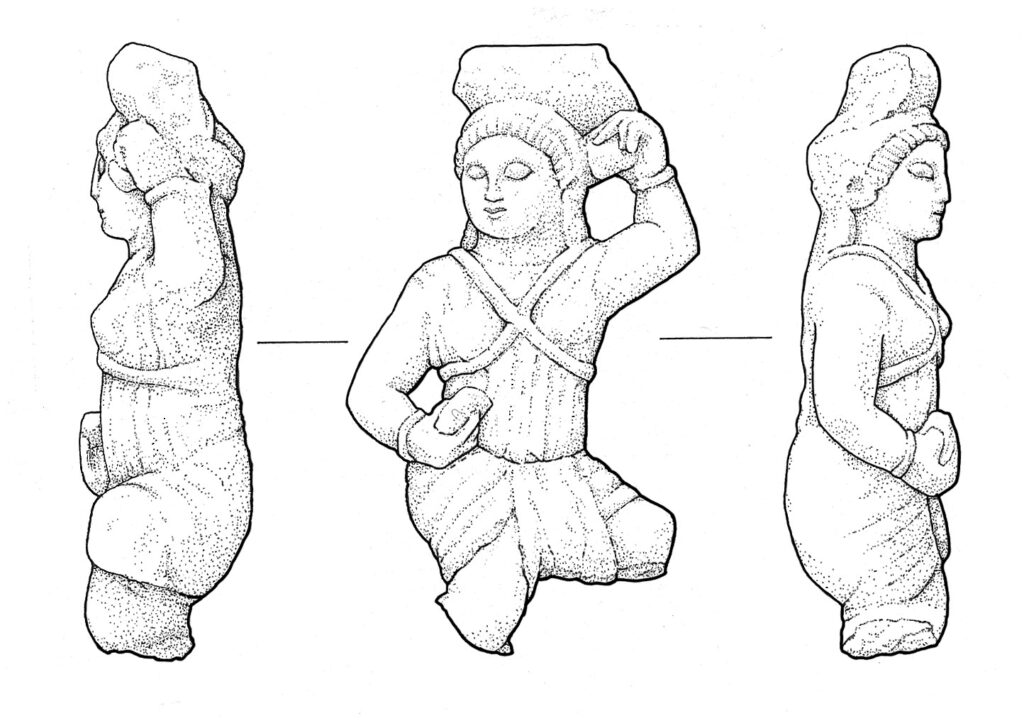
One of my most common tasks as an archaeological illustrator is creating detailed artifact drawings. This pen and ink illustration depicts a limestone figurine of Artemis, which stands approximately 15 cm (6 inches) in size. The figurine dates to the Iron Age and was excavated at Idalion, a Cypriot city-kingdom that grew wealthy through the island’s copper trade.
Ancient Cyprus was home to several regional sculptural workshops that each had a characteristic style. The modelling of the faces is a distinctive feature of these styles, and I paid special attention to the accurate rendering of the figurine’s face. Precision in drawing a piece like the Artemis figurine enables researchers to compare it with other examples and confidently attribute it to the local Idalion workshop.
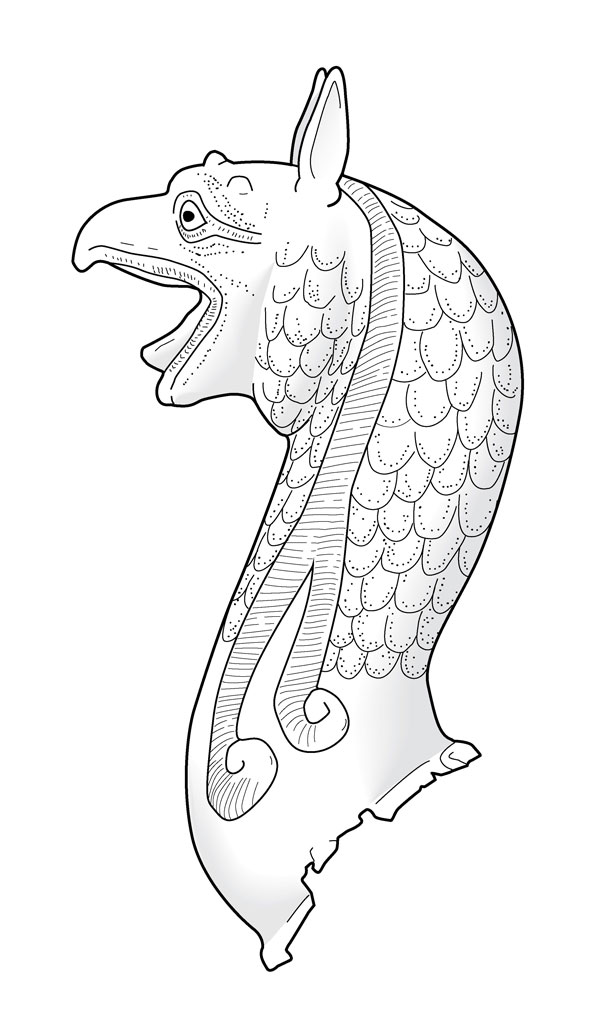
This illustration depicts a bronze griffin-head attachment that originally decorated the rim of an Etruscan cauldron. Vessels of this type typically featured multiple griffin protomes arranged evenly around the rim and facing outward. They are a characteristic of the Orientalizing Period (late 8th to 7th centuries BCE) of Etruscan art.
This drawing was created from reference photographs rather than from the artifact itself. Working from photographs requires collaboration with the client and often involves additional research to ensure accuracy since the angle, lighting, and resolution of a single photograph may not capture all of the details needed for an evidence-based, publication-quality drawing. Fortunately, in this case, reference materials were available to pick out details from different photographs and combine them into the finished drawing. I have always admired the flowing lines of Etruscan art, so this piece was a pleasure to draw.
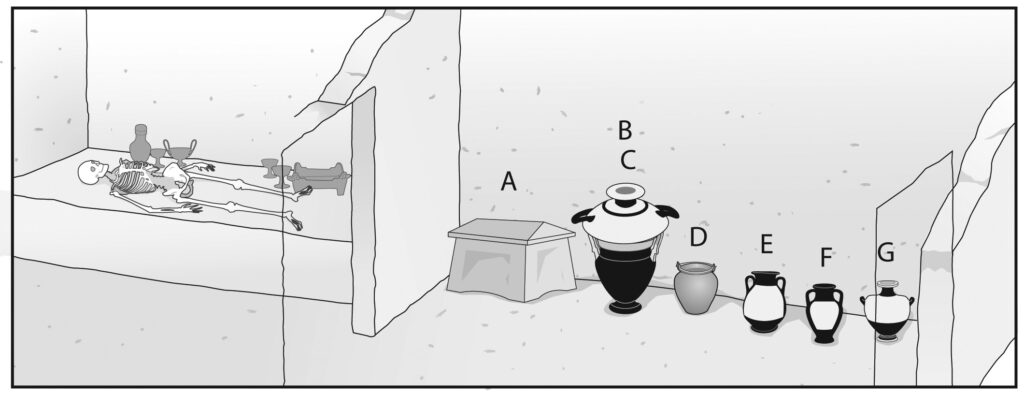
In addition to archaeological illustrations of individual artifacts, I collaborated with archaeologists and art historians to develop reconstructions of sites to give those objects the context needed to fully understand and interpret them. Drawing reconstructions requires background research, analysis, and interpretation and is often a process of discovery for the archaeologist as their ideas become visible on the screen.
This drawing is a reconstruction of an Etruscan tomb including the find locations of artifacts, which the client was discussing in a publication. The tomb was excavated in the 19th century, and the records were not detailed, but the reconstruction allows the researcher to visualize the context of their material and share that with others.
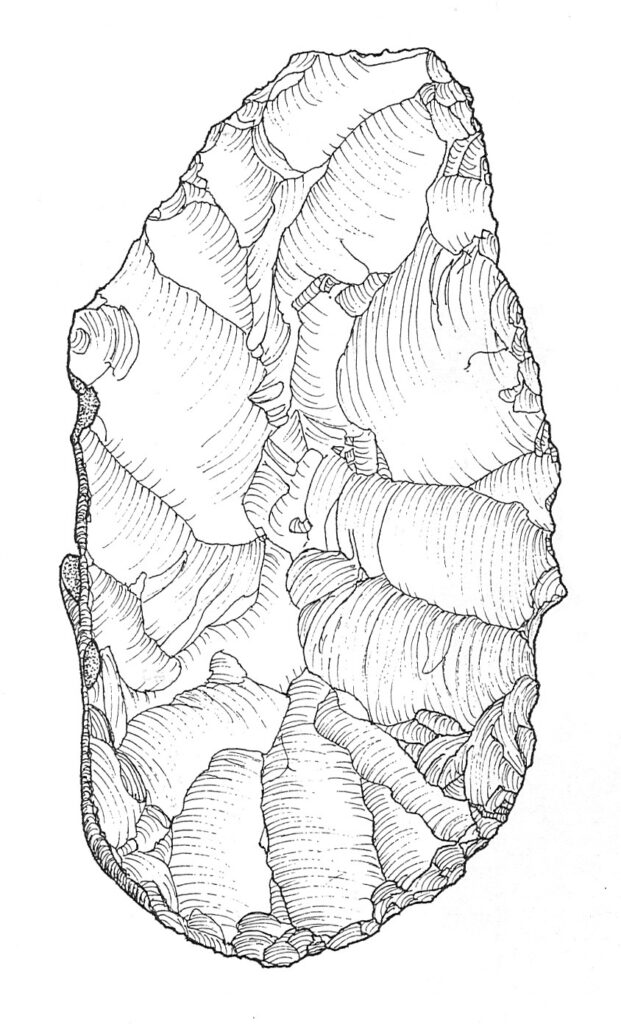
Lithic artifacts, like this large, knapped stone tool, are among the best examples of why archaeological illustration remains an essential method of recording artifacts, as a carefully executed drawing can often communicate details more clearly than even a high-quality photograph..
Every flake scar preserved on the surface of a stone tool provides evidence of the knapping process used to create it. Accurately recording each flake scar is critical and enables researchers to study the manufacturing methods and technological traditions of the makers. The curved line within each flake scar indicates the direction from which the flake was struck. To record these details as accurately as possible, I examined the artifact under angled light and carefully measured with a high-precision caliper. The result lets archaeologists analyze how the stone tool was manufactured.

Pottery is one of the most frequently illustrated artifact types in archaeology. Ceramic analysis depends on precise comparison, and archaeological illustrators follow internationally recognized drawing conventions that present pottery in a consistent visual format. This allows researchers to compare vessels from different excavations, regions, and publications while speaking the same visual language.
This drawing records a bichrome ware bowl excavated at Idalion, Cyprus. Only fragments of the vessel survive, and I created the drawing from joined sherds that were used to calculate the diameter. The wall thickness was also carefully measured and recorded in a sectional profile, while both the interior and exterior surfaces were illustrated according to conventions.